Optical devices Shimadzu

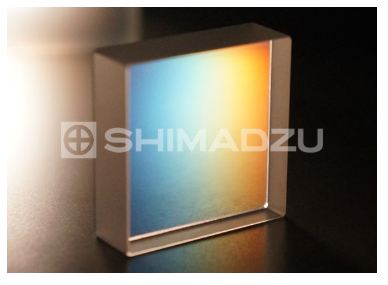
This is a grating suitable for a compact spectrometer with a transmissive optical system, manufactured using Shimadzu's expertise in holographic exposure and etching technology.


Features


  • Low alignment sensitivity, making installation into the device easy
  • Low polarization sensitivity
  • High efficiency in a specific wavelength range thanks to blazed grooves of master gratings manufactured by holographic exposure and ion-beam etching technology
  • Stable quality by precisely replicating from the master gratings
  • Specifications can be customized according to your requirements


Application Examples


Compact spectrometer, Hyperspectral camera, Thickness monitor, Raman spectrometer, OCT
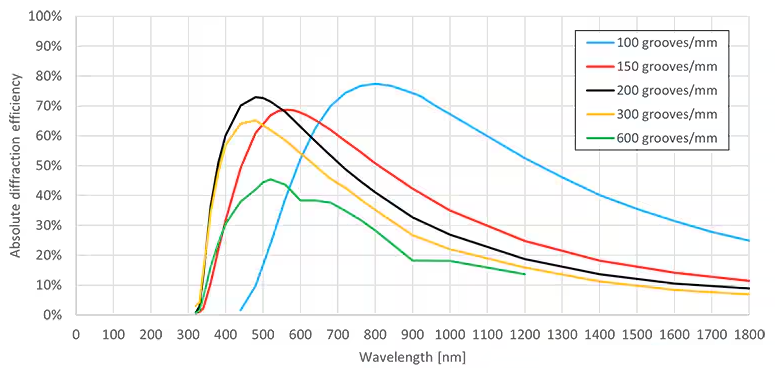
Diffraction efficiency (+1 order light, 0 degree incidence, unpolarized light)


diffraction efficiency shimadzu

 * This is a reference value and not guaranteed.
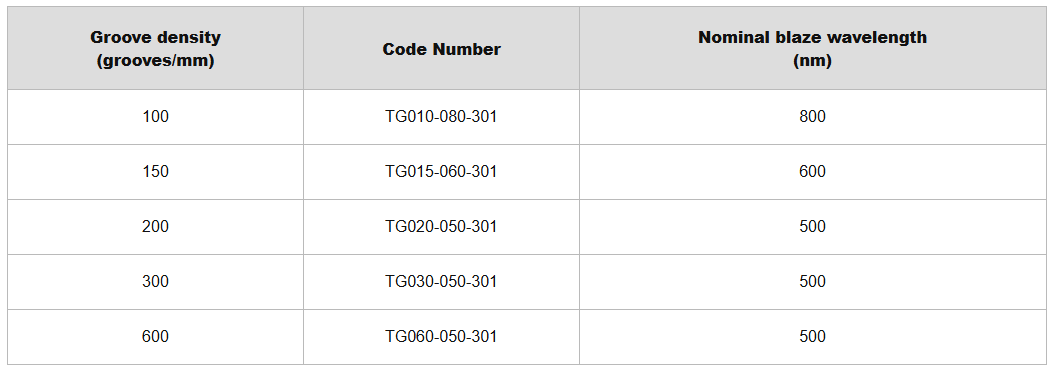
 

Standard Item List


optical devices shimadzu


optical devices shimadzu

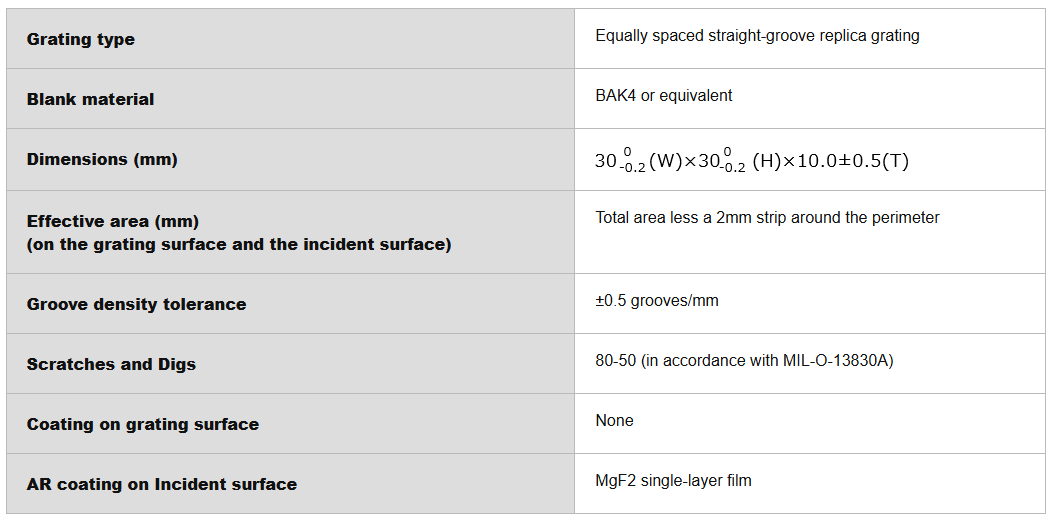
* The grating grooves are formed with resin.
* The external appearances and specifications are subject to change without notice.
* The nominal blaze wavelength is the wavelength at which the maximum diffraction efficiency occurs at 0 degree incidence under unpolarized light. No one to guarantee the wavelength of the maximum diffraction efficiency.
* Be sure to prevent contact touching the diffraction grating surface and the incident surface as this can cause a significant deterioration of optical characteristics.
* Be sure to prevent condensation as this can cause a significant deterioration of optical characteristics.
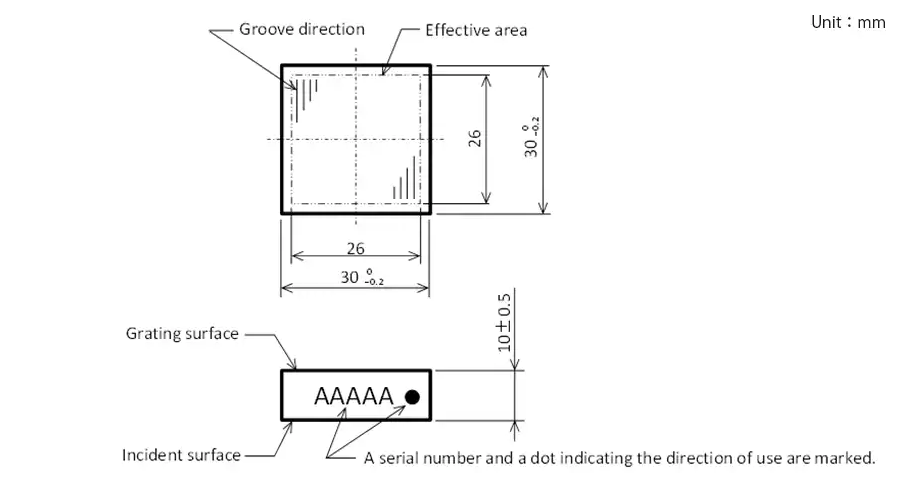
 

Outline Drawing (This drawing is a third angle projection)


optical devices shimadzu


Example of Optical Mount


optical devices shimadzu


The Grating Equations for Transmission Gratings

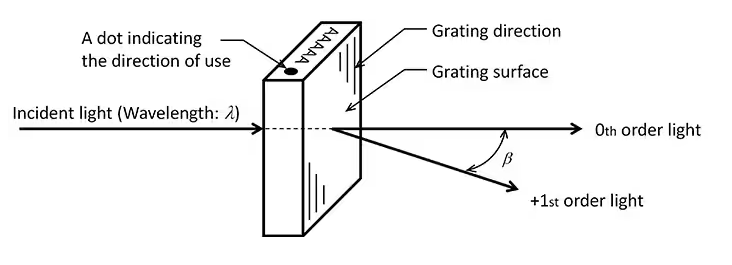
Shimadzu’s transmission gratings are used in the way shown in the upper figure, with light entering at an angle perpendicular to the incident surface of the grating. In this case, α = 0 and grating equation is the following:

                                                                                                                                                                          sin⁡β=Nmλ

where β is the diffraction angle, N is the groove density, m is the order of diffraction, and λ is the wavelength. Please use the order of diffraction m = +1.


{"title":"Downloads","description":"Download the latest brochure.","source":"product","key":5886,"max":30,"filter_types":["brochures"],"link_title":"View other Downloads","link_url":"","pdf_links":[]} {"title":"Applications","source":"product","key":5886,"max":3,"filter_types":["applications","application_note","posters"],"link_title":"Learn more","link_url":false,"config_list":[],"page_links":[],"column_title":"Documents"} {"title":"Technical Documents","source":"product","key":5886,"max":3,"filter_types":["technical","technical_reports","white_papers","primers"],"link_title":"Learn more","link_url":"#table_anchor_technical","config_list":[],"page_links":[],"column_title":"Documents"} {"title":"Manuals","source":"product","key":5886,"max":3,"filter_types":["manuals"],"link_title":"Learn more","link_url":"#table_anchor_manual","config_list":[],"page_links":[],"column_title":"Documents"}